
Building capacity.
Lessons from two destination organizations.
AI is becoming an organizational capability that can expand capacity. Visit Raleigh and Visit Greenville share what worked in practice, what did not, and where organizations of any size can start on Monday morning.
We are in the golden age of small teams.
AI gives us more ways to put ideas into practice and take on work that once required more resources than we had available. For destination and small organizations, that opens up possibilities and expands what they can accomplish.
AI is becoming an organizational capability that can expand capacity. What you build internally, what you access externally, and how effectively you put both to work across the organization.
I think about the capacity AI creates in three ways:
Faster
Efficiency
Spending less time on routine work.
Better
Quality
Improving quality.
New
Innovation
Unlocking work that was previously impossible, or doing it in a completely new way.
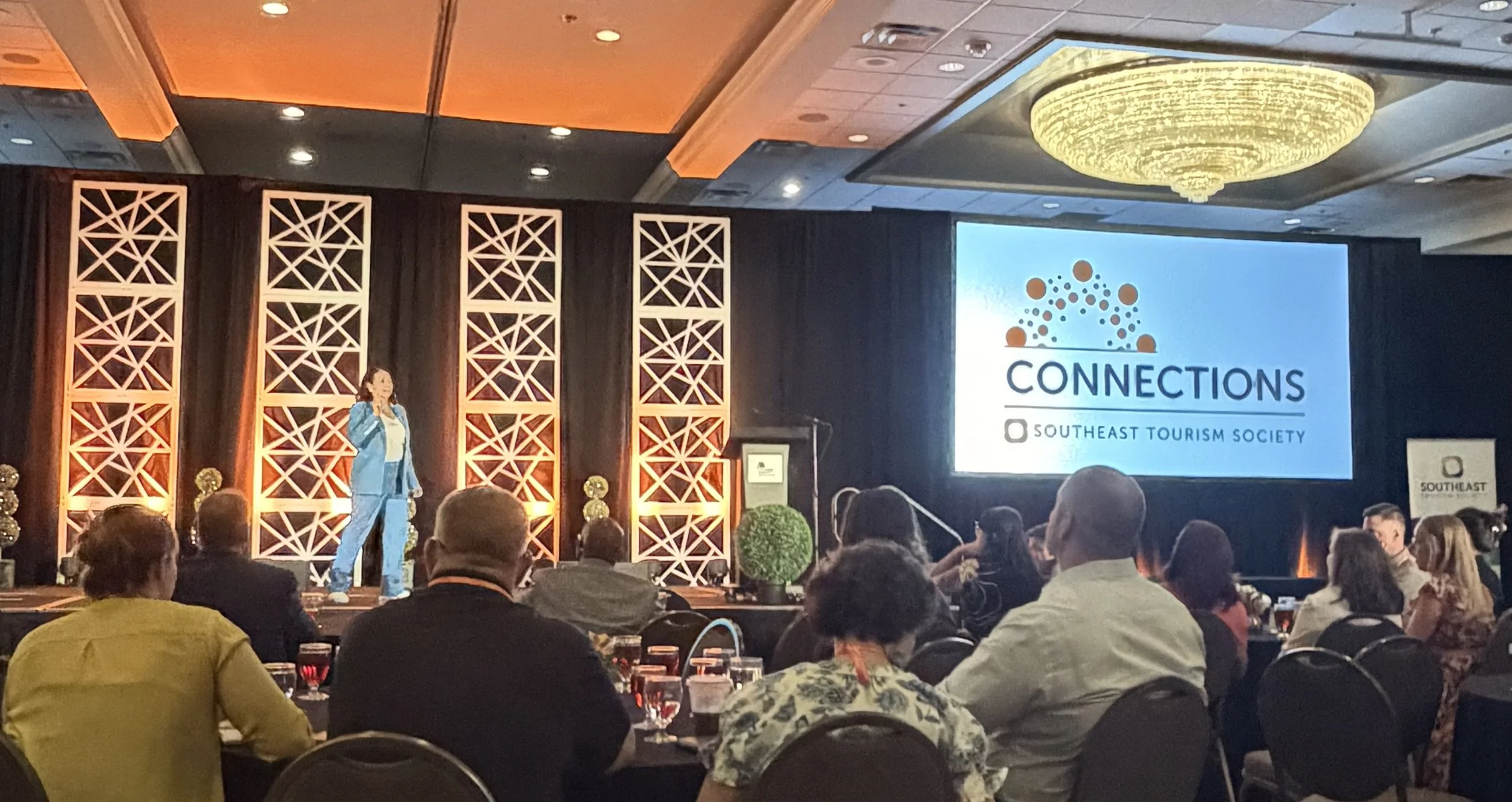
At the Southeast Tourism Society’s Connections event in Richmond this month, AI execution was on the program for the first time. Vimal Vyas from Visit Raleigh and Ray Reulbach from Visit Greenville joined me on stage. We discussed what worked and what did not.
Their AI applications included qualifying meeting leads, improving reporting, using website chatbots, and embedding travel-planning tools, all of which became part of their operations. They also shared the rationale behind their decisions for those applications: how to build confidence, establish guardrails, and help people change the way they work.
How they got started.
Raleigh began by engaging its team + board.
Vimal’s team started in 2023, when Destinations International published its Destination NEXT study. AI was the number one trend. He used that stat to implement change. They first pushed a website chatbot and partnered with Satisfi Labs to build it.
Their deployment involved engaging the internal team, and the tourism board members wanted to ensure it was more than hype. So they provided ongoing training and helped staff understand what AI is, what hallucinations are, and what to expect from a chatbot. The internal team and board members tested it for buy-in.
Those early hands-on adoptions became an ongoing strategy and an AI policy. Every quarter, staff are trained and go over their policy, which emphasizes keeping their efforts human-centered. People remain responsible for monitoring how AI is used.
Today, Raleigh measures itself against an AI maturity model. Seven areas, each scored from 1 to 5: strategy and leadership; use cases and adoption; data readiness; technology and infrastructure; talent and culture; governance and ethics; and marketing, including AI search visibility. More importantly, you need to know where you stand in terms of maturity.
Greenville started by assessing usage.
Visit Greenville began its journey in 2025.
The plan was to write a policy first. Then Ray stopped and backtracked. How could they write a policy without knowing how people were already using AI?
So they surveyed the whole staff. 83 percent participated. Every single one was already using AI across eight different tools, with no direction.
The top concern was privacy. That surprised Ray at first. What he discovered was that people needed clear guidance on when and how to use these tools. It is important to identify the data-sharing standards up front.
Greenville launched ChatGPT Business across the organization and shaped the policy around workflows and people. The policy exists so that people feel free to use it rather than bring in their own tools.
There were early wins right away across teams. The marketing team used to pull metrics from multiple sources into a spreadsheet. Now it is one prompt. They still validate the numbers. But what used to take a full week of routine work now takes about an hour. They also used their survey data to build several persona frameworks, so they never have to re-teach AI who their audiences are.




What the work actually looks like.
The meetings agent. Raleigh had a 30-question RFP form on its website. Now, the agent asks some of those questions to qualify a lead during the conversation. Type of meeting. Number of people. Convention center or not. Space requirements. The whole exchange takes less than two minutes. The agent summarizes the conversation, emails the sales team, emails the planner with a promise of a 24-hour follow-up, and integrates with the sales workflow. Next, it will feed the lead directly into the CRM.
When the first qualified lead came within hours of launch, the team was ecstatic. About 140 interactions followed in the first month.
The Stanley Cup. During the Carolina Hurricanes' two-week finals run, Raleigh's chatbot remained live on the Carolina Hurricanes' website. A fan could ask about parking and tickets, then click a button and ask Visit Raleigh about nearby restaurants and events, all in one conversation. About 112,000 people attended games and watch parties. Another 193,000 came to the victory parade. The chatbot handled nearly 4,000 conversations during a large event and saved about 195 hours of staff time.
The trip planner. AI brings in less than 5 percent of Greenville's traffic, but it is the most qualified traffic they have. By the time those visitors arrive, they are ready to act, and their visitation rate is three times higher. So, MindTrip’s AI travel assistant was integrated live and achieved an 8% engagement rate at launch. The bigger win sits underneath. The marketing team digs into those conversations to find content gaps and understand what travelers look for. What used to take weeks of manual site audits now takes minutes, and they are already reworking their seasonal hubs content as a result. Ray said the map feature is widely used for building itineraries.
The sounding board. Greenville built custom GPTs loaded with their brand health surveys, resident sentiment, stakeholder surveys, and strategic plan. They run their messaging through it as a check, and it surfaces the small watchouts a team might miss. Their employee handbook GPT alone has saved a lot of email. You do not need to be an expert to build one.
Frontier labs continue to improve their models and move towards active systems. For instance, OpenAI’s custom GPTs are transitioning to Skills, reusable workflow templates. At the current rate of change, we are constantly operating in beta mode.
The people part.
People are the software of any organization, and that’s where the adoption gets messy. In our own listening studies, we see some angst towards transformation + change. "We are choking in change.” “Don’t slap it on our face.” “There are too many choices.” “It is too much." “I don’t have time.” These are the pain points some people point out.
Ray calls it the tinkering trap. About 76 percent of people are still figuring out which tool to use. They have five tools and jump around. Only about 25 percent have embedded AI into a process in a way that actually works. We do not talk enough about the inefficiencies AI can cause.
And then there is the AI sludge spiral. AI can iterate forever; it keeps refining its outputs. So when is it good enough?
So here is what we discussed about what works:
Lead with the outcome. Understand the frustration and bottlenecks first, and the right solution follows.
Wins in staff meetings. Every department shares one. It builds transparency and gets people excited to adopt.
Own your output. Put a stamp on it if AI helped, and be proud of it. But the final product is yours. AI is draft mode. Greenville emphasized this.
One-on-ones. Sit with your team. Ask what frustrates them. "I am tired of running this report." That is where the use case lives.
Revisit the job descriptions. Raleigh did. Put it on paper, or expect the questions.
Governance is about people, and it’s an ongoing responsibility. Guardrails are what let you press the gas pedal faster.
The honest lessons.
Data is dirty. AI is only as authentic and trustworthy as the information behind it. Raleigh's chatbot connects to the CRM, the content management system, events, and partner data, and all of it has to work together. Without solid data, there is no solid AI. However, cleaning data is still the frustrating part. Then there is the data storage part, and how it is stored and shared is a legal matter.
The cost of implementing AI is real. As AI becomes a new budget item and its usage rises, it requires resource allocation. A better perspective focuses more on how implementation leads to better outcomes and on how we are investing in talent to build stronger capabilities. Ray added that we should treat AI fluency as professional development. Let people adopt what works for them, within your governance.
Trust is fragile. People are skeptical of AI content. AI slop is everywhere. As placemakers, we have to think critically about when, and how far we push, as well as about transparency, to protect trust in the destination.
What is next.
Raleigh is piloting free AI agents for partners and venues. For example, Red Hat Amphitheater saw people asking about wheelchairs and updated their accessibility information. There is still red tape. It took getting through the City of Raleigh's cybersecurity department, and Vimal is committed. He is building a connected destination where agents communicate with one another: an agentic destination.
Greenville is watching visibility. Where do they show up in AI answers? Where should they be showing up? How do earned media and their own content get cited? Ray's advice for getting started: find the AI enthusiast in your organization. This is an everybody role. But someone has to rally the team.
Monday morning.
Not every DMO has started its AI journey, and some operate on limited budgets. So, here is where you can begin.
WHERE TO BEGIN:Create a simple AI policy. Engage your team on best practices, build guardrails, secure your data, and invest in learning.
Find your champion(s). Their wins are your organization's wins. Share them. That is how adoption spreads.
Pick a repetitive task. Evaluate an existing process, then improve it and introduce workflows.
Add your FAQs. Machine-readable sites are here, and LLMs need clear answers. FAQs are a quick solution.
Put AI on the meeting agendas. Focus on outcomes and bring cross-functional teams together.
Unlearn something. We all carry outdated routines. Kill them. Decide what you are going to get rid of.
Learning to unlearn.
Intelligence itself is being automated, and it is changing how we work.
Soon, organizations will have more agents than people. That is a whole new ecosystem, and it is being constructed now. AI is an investment in your capacity, which can become a competitive advantage.
And understand that the cost that matters most is the cost of waiting.
* * * * * * * *
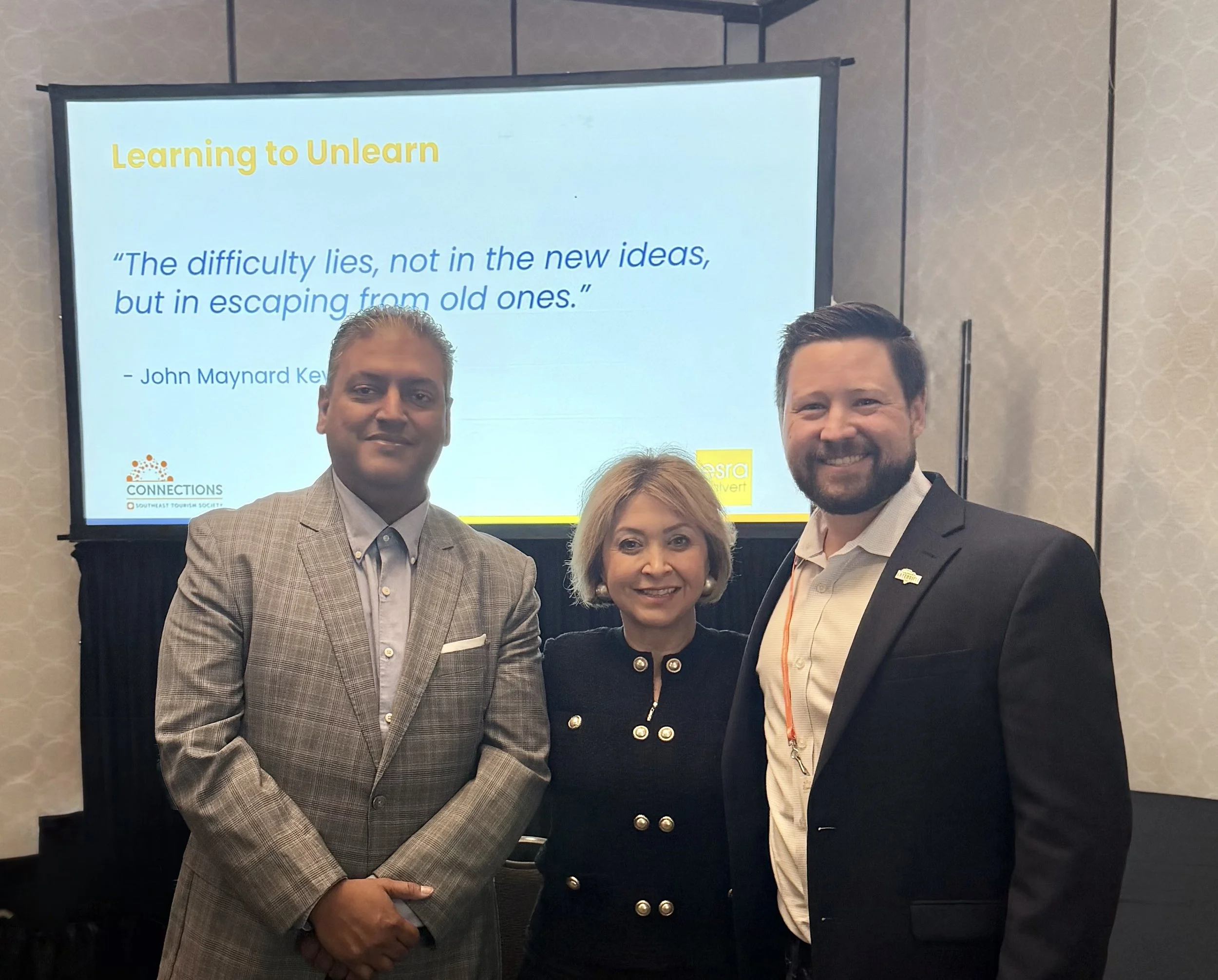
“The difficulty lies, not in the new ideas, but in escaping from old ones.”
- John Maynard Keynes
This session was part of STS Connections 2026 in Richmond. Thank you to Nan, Vimal, Ray, and the STS team for putting AI execution on the program.
